Forklift Operator Hands-On Evaluations: OSHA Guide to Safe and Compliant Certification
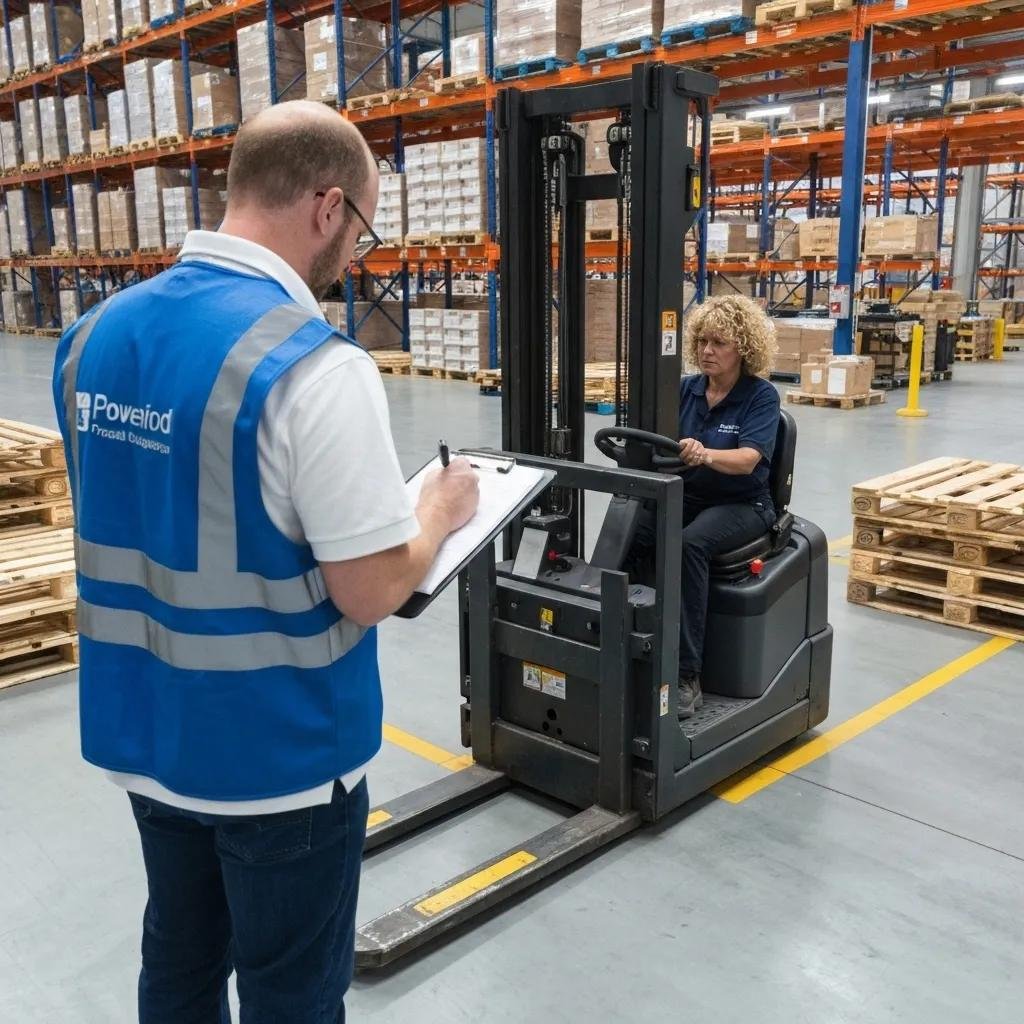
OSHA Forklift Hands-On Evaluation: A Simple Guide for Operators and Safety Managers
Do your forklift operators know how to handle their trucks safely on the job?
OSHA says it’s not enough to take a class or pass a test. Forklift drivers must also prove they can operate safely in real work conditions. This is called a hands-on evaluation, and it's required under OSHA Standard 29 CFR 1910.178.
This guide explains:
- What a forklift hands-on evaluation is
- Who can conduct it
- Step-by-step evaluation process
- What OSHA looks for
- When operators need recertification
- How to document everything
- FAQs and myths that confuse many employers
What Is a Forklift Hands-On Evaluation — and Why Does OSHA Require It?
A forklift hands-on evaluation is a practical test. It’s done at the worksite to confirm the operator can safely use a forklift—not just answer questions about it.
Evaluators check:
- Pre-use inspections
- Safe load handling
- Turning, stopping, and parking
- Navigation through tight spaces
- Awareness of surroundings and rules
This evaluation helps reduce accidents, keeps operators accountable, and ensures compliance with OSHA safety standards.
What Does “Hands-On” Mean?
“Hands-on” means the test must happen:
- On-site
- Using the actual forklift the worker will operate
- In real or simulated work conditions
It’s not a quiz. The evaluator watches the operator perform actual tasks and scores them based on safety and performance.
Why It’s So Important
Hands-on evaluations help:
- Catch unsafe habits early
- Reinforce what was taught in training
- Ensure forklift safety on every shift
- Protect the business from OSHA fines and liability
OSHA Standard 1910.178 Requirements
Under OSHA 1910.178(l), every forklift operator must:
- Get formal training (classroom or online)
- Practice with the equipment (under supervision)
- Pass a performance evaluation before operating alone
These steps apply to all powered industrial trucks, including sit-down forklifts, stand-up trucks, and narrow-aisle lifts.
What’s the Difference Between Formal Training and Hands-On Evaluation?
- Formal training: Learning rules and safety procedures (videos, manuals, classes)
- Hands-on evaluation: Proving those skills in a live setting using the equipment
OSHA requires both parts to certify a forklift operator.
Who Can Perform the Evaluation?
Only a competent person can do the evaluation. That means someone who:
- Has experience operating forklifts
- Knows OSHA regulations
- Can recognize unsafe behaviors
- Has the authority to approve or deny operator certification
Can Supervisors Conduct the Evaluation?
Yes—as long as they meet the definition of a competent person. This is often a supervisor, safety manager, or lead operator trained in forklift safety.
Doing evaluations in-house can:
- Make scheduling easier
- Build trust and accountability
- Integrate safety into daily operations
Step-by-Step: How to Conduct a Forklift Evaluation
To be OSHA-compliant, the evaluation must include:
1. Verify Operator Status
Make sure the operator has:
- Completed formal training
- Enough hands-on practice
2. Inspect the Equipment
Before testing, confirm that the forklift is safe and in good condition:
- Tires, forks, horn, seatbelt, lights, brakes, warning labels
3. Observe Operator Performance
Have the operator perform key tasks, including:
- Pre-use inspection
- Starting and stopping
- Turning in tight spaces
- Lifting, tilting, and lowering loads
- Stacking and unstacking
- Parking and shutting down the forklift
4. Use a Scoring Checklist
Score each task using a standardized evaluation form. Document all observations.
5. Provide Immediate Feedback
Review what went well and what needs improvement. Offer retraining if needed.
6. Record the Results
- Mark pass/fail status
- Keep a signed, dated copy on file
What to Include in Your Evaluation Checklist
Your forklift evaluation checklist should cover:
- Pre-operation inspection steps
- Load handling and stability
- Speed control
- Safe turning and backing up
- Use of horns and mirrors
- Observance of floor markings, aisle rules, and pedestrian safety
Using the same checklist for all operators ensures consistency and makes your records easier to maintain.
Adjust for Real-World Work Conditions
Your evaluation should reflect the actual environment your operators work in. Include:
- Narrow aisles or congested traffic
- Ramps, loading docks, or uneven surfaces
- Indoor/outdoor transitions
- High-stacked or unstable loads
- Pedestrian zones or shared spaces
Operators must show they can handle your specific worksite safely.
Key Forklift Hazards to Watch For
| Hazard | What to Evaluate |
|---|---|
| Tip-overs | Turning too quickly, carrying loads too high |
| Load shifts | Improper stacking or exceeding capacity |
| Speeding | Unsafe driving or failure to slow near people |
| Poor visibility | Failing to use a spotter or mirrors |
| Pedestrian safety | Not yielding or using the horn properly |
Recordkeeping and OSHA Compliance
Proper documentation is just as important as the evaluation itself. Be ready to show your records if OSHA inspects your facility.
Keep on file:
- Operator’s name
- Evaluation date
- Forklift type
- Evaluator’s name and credentials
- Checklist or evaluation form
- Feedback notes and retraining (if any)
- Final pass/fail result
Store these in a central file (digitally or on paper) and keep them up to date.
Frequently Asked Questions
Do All Forklift Operators Need a Hands-On Evaluation?
Yes. OSHA requires a hands-on skills test in addition to formal training before an operator can drive on their own.
Do We Have to Give a Written Test Too?
Yes. Operators must take a written or verbal test and pass the hands-on evaluation. Both are required for certification.
How Often Do We Need to Re-Evaluate?
At least every 3 years, or sooner if:
- The operator is involved in an accident
- You observe unsafe operation
- They’re assigned to a new type of forklift
What’s the Best Way to Organize Evaluation Records?
- Use one form per operator
- Label clearly by name, date, and equipment
- Store them in a secure but accessible location
- Keep logs updated after recertification or retraining
Can Technology Help?
Yes. Using:
- Digital checklists
- Tablets for in-field scoring
- Cloud-based record storage
- Video recordings (if allowed by policy)
…can improve consistency, save time, and support audits. Just remember—the evaluation must still be done in person.
What Are the Risks of Skipping Hands-On Evaluations?
- OSHA fines (up to $16,131 per violation as of 2025)
- Serious injury or fatal accidents
- Equipment or product damage
- Higher insurance premiums
- Lower morale and legal exposure
How Should We Give Feedback to Operators?
- Be clear and respectful
- Focus on behaviors, not the person
- Deliver feedback privately when possible
- Note what went well, and what to improve
- Set clear steps if retraining is needed
How Can We Prepare for an OSHA Inspection?
- Make sure every forklift operator has a complete evaluation record
- Keep your evaluation checklist up to date
- Train evaluators properly
- Review your documentation regularly
- Be ready to show proof of compliance
Final Tip: Hands-on evaluations protect your team and your business. They’re more than just an OSHA requirement—they’re a key part of keeping your workplace safe, productive, and professional.