In-House Forklift Training Kits vs. Off-Site Contractor Training
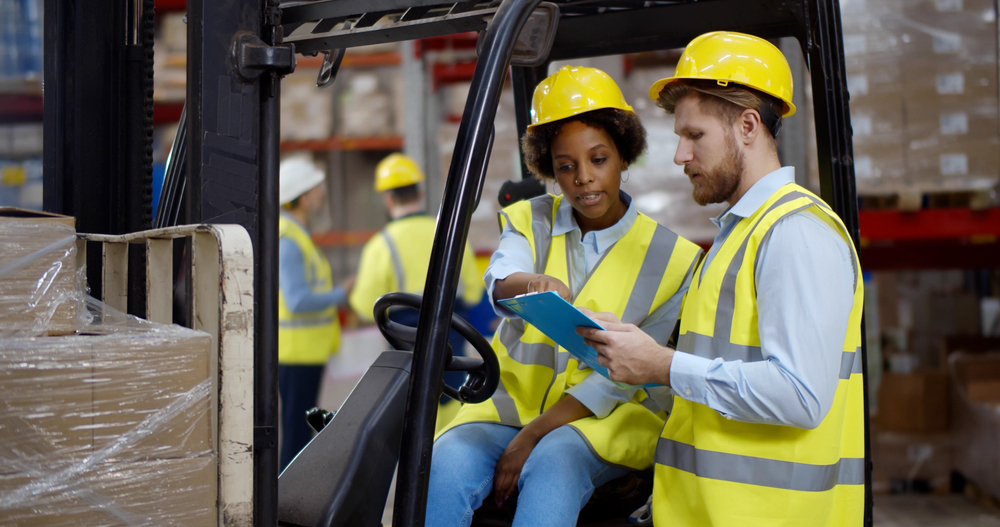
Forklift operators must be trained and certified to meet OSHA requirements. When it comes to forklift training, employers typically choose between off-site contractor training and in-house forklift training kits.
For most businesses, in-house forklift training kits offer clear advantages in cost, speed, flexibility, and operational control—without sacrificing OSHA compliance.
This article explains why employer-managed, in-house forklift training is often the better choice for companies that need to certify operators efficiently while maintaining a strong safety program.
The Business Advantage of In-House Forklift Training Kits
Covers All Forklift Classes in One Training System
A quality in-house forklift training kit can cover all OSHA forklift classes (Classes I–VII) in a single program. This includes:
- Warehouse forklifts
- Electric pallet jacks
- Reach trucks and order pickers
- Rough-terrain forklifts
Off-site contractor training often requires separate classes for different equipment types, which increases cost and complicates scheduling. In-house kits allow employers to train operators on every forklift used at their facility using one consistent system.
Lower Training Costs – Significant Long-Term Savings
In-house forklift training kits are far more cost-effective than hiring outside trainers. There are no instructor travel fees, no per-day training rates, and no minimum class sizes.
Once purchased, a forklift training kit can be reused for:
- New hires
- Refresher training
- Replacement operators
This dramatically reduces training costs over time. Off-site contractor training, by contrast, often costs hundreds of dollars per operator every time training is needed.
Flexible Scheduling with Minimal Downtime
Off-site training requires employees to attend training at fixed times, often pulling entire crews off the floor for a full day.
In-house forklift training kits allow employers to:
- Train operators one at a time
- Schedule training during slow periods
- Avoid overtime and production delays
Training happens when it makes sense for operations—not when a contractor is available.
Faster Completion and Same-Day Certification
In-house forklift training kits allow operators to complete the formal training portion in 1–2 hours. This makes it possible to certify new hires on the same day they start work.
Off-site contractor training often takes a full day or more and may require waiting days or weeks for an available class. In-house training eliminates those delays and keeps operations moving.
No Outside Trainers Required
With in-house training kits, employers don’t need to bring outside instructors onto their site or send employees off-site.
This means:
- No travel time
- No site access issues
- No disruptions from visiting trainers
Employees complete training at work or at home, and employers maintain full control of the training process.
Standardized Training Across All Locations
In-house forklift training kits provide consistent, standardized instruction for every operator. Each employee receives the same training content, quizzes, and materials.
Off-site contractor training can vary depending on the instructor or provider. In-house kits help employers maintain a uniform safety standard across all shifts and locations.
Instant Certification and Simplified Recordkeeping
After completing training, operators can immediately receive proof of certification. Digital certificates, wallet cards, and training records are easy to store and retrieve.
Employer dashboards make it simple to:
- Track operator certifications
- Monitor expiration dates
- Provide documentation during OSHA inspections
Paper-based records from contractor training are harder to manage and easier to lose.
Simplified OSHA Compliance
OSHA requires forklift operator training under 29 CFR 1910.178(l). This standard requires:
- Formal instruction (classroom, online, or video-based)
- Practical training and evaluation conducted by the employer
In-house forklift training kits fully satisfy the formal instruction requirement. Employers then complete the required hands-on evaluation using their own equipment and provided checklists—exactly as OSHA intends.
This approach keeps employers compliant while maintaining control over training quality.
Less Disruption to Daily Operations
In-house training allows employers to train operators individually instead of removing multiple employees from production at the same time.
Off-site training often creates:
- Staffing shortages
- Production slowdowns
- Scheduling challenges
In-house kits allow training to fit seamlessly into daily operations.
Scales Easily for Growing Teams
Whether training one operator or one hundred, in-house forklift training kits scale easily. There are no class size limits and no scheduling delays.
This makes in-house training ideal for:
- Growing companies
- High-turnover environments
- Seasonal hiring needs
Ongoing Access to Training Materials
In-house training kits allow both employees and managers to revisit training materials at any time. This is helpful for:
- Refresher training
- Safety meetings
- Incident reviews
- OSHA audits
With off-site contractor training, access to materials usually ends when the class is over.
Free or Low-Cost Renewals and Recertification
OSHA requires forklift operators to be re-evaluated at least every three years. In-house training kits make recertification simple by allowing employers to reuse the same training materials.
Off-site training typically requires paying for an entirely new class each time operators need to be re-certified.
Multilingual Training Options
Our in-house forklift training kits are available in multiple languages, including English and Spanish. This helps ensure employees fully understand safety requirements.
Scheduling multilingual off-site training is often difficult and expensive.
Improved Learning Experience
Modern in-house training kits use videos, quizzes, and interactive content. Operators can pause, replay, and review sections as needed.
This self-paced approach often improves comprehension and retention compared to long classroom sessions led by outside trainers.
Summary
In-house forklift training kits provide:
- Lower long-term training costs
- Faster certification
- Flexible scheduling
- Easier OSHA compliance
- Consistent, standardized instruction
For most employers, in-house training is the most efficient and cost-effective way to certify forklift operators while maintaining safety and compliance.
Side-by-Side Comparison: In-House Forklift Training Kits vs. Off-Site Contractor Training
| Factor | In-House Forklift Training Kits | Off-Site Contractor Training |
|---|---|---|
| Forklift Types Covered | Covers all major forklift classes (Classes I–VII) in one system | Often requires separate classes for different equipment |
| Cost per Operator | Low long-term cost; reusable for multiple employees | High per-person cost every time training is needed |
| Scheduling | Fully flexible; train anytime | Fixed schedules; limited availability |
| Training Duration | 1–2 hours for formal training; hands-on evaluation on-site | Often 1–2 full days |
| Location | On-site or remote; no travel required | Travel to training center or instructor visit required |
| Hands-On Evaluation | Performed on employer’s actual equipment | Often done on unfamiliar equipment |
| Consistency | Standardized content for every operator | Instructor-dependent |
| Recordkeeping | Digital records and certificates | Paper-based documentation |
| Renewals | Simple and low-cost using same kit | Full class must be repurchased |
Why HR Managers and Business Owners Prefer In-House Forklift Training
Faster Compliance and Reduced Liability
In-house training allows employers to certify operators immediately, reducing compliance gaps and lowering the risk of OSHA citations.
Streamlined Training Management
Training can be assigned in minutes without coordinating outside vendors. Digital dashboards simplify tracking and documentation.
Consistent Safety Standards
Every operator receives the same training, reinforcing a strong, company-wide safety culture.
Better Use of Time and Resources
No lost production days, no overtime, and no scheduling headaches. Training becomes part of normal operations instead of a disruption.
Higher Employee Satisfaction
Employees appreciate flexible, self-paced training that avoids travel and long classroom sessions. Better engagement often leads to better safety performance.
Final Takeaway
In-house forklift training kits provide a cost-effective, flexible, and OSHA-compliant solution for training forklift operators. They allow employers to certify workers faster, reduce downtime, and maintain better control over safety and compliance.
For most businesses, in-house forklift training delivers the same required instruction as off-site contractor training—while saving time, money, and administrative effort. It’s a smarter, more scalable approach to forklift safety training.