OSHA Accident Investigation for Forklift Safety
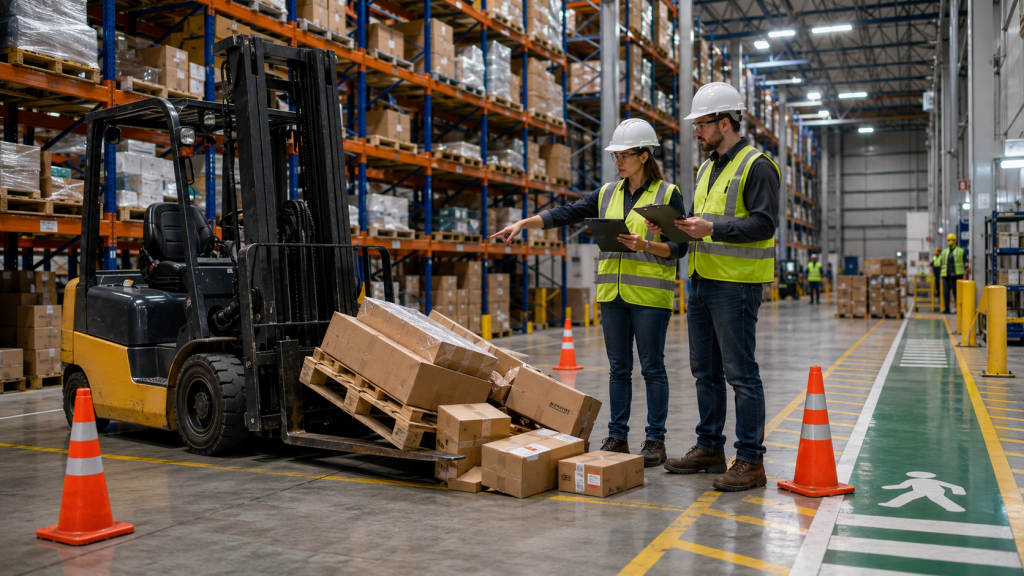
OSHA Accident Investigation: Forklift Safety, Near Misses, and Root Cause Analysis
Forklift accidents rarely come out of nowhere. A serious incident may happen in seconds, but the causes usually build over time: a missed inspection, poor traffic control, unstable load, rushed operator, weak supervision, or incomplete training process.
That is why OSHA accident investigation matters. After a forklift accident or near miss, employers should look beyond the obvious event and ask what allowed it to happen. The goal is not to blame one worker and move on. The goal is to find the root cause, correct the hazard, and prevent the same problem from happening again.
For companies that use forklifts, accident prevention starts before the incident. A strong program should include operator training, practical evaluation, equipment inspections, near miss reporting, emergency response procedures, and clear documentation. ForkliftCertification.com helps employers build an in-house forklift training process with tools designed to support OSHA-aligned training, evaluation, and compliance records.
Regulatory Requirements for Forklift Safety
OSHA regulates forklifts under the powered industrial truck standard, 29 CFR 1910.178. This standard requires employers to make sure forklift operators are trained and evaluated before they operate powered industrial trucks in the workplace.
A complete forklift training process includes three major parts:
- Formal instruction: Classroom-style learning, which may include online training, video, written materials, lectures, or interactive learning.
- Practical training: Hands-on demonstrations and exercises using the equipment.
- Performance evaluation: A qualified person observes the operator using the forklift safely in the actual workplace.
The employer must also certify that training and evaluation have been completed. That record should include the operator’s name, the training date, the evaluation date, and the name of the person who performed the training or evaluation.
Online training can help satisfy the formal instruction portion of the process. However, employers are still responsible for completing and documenting the hands-on training and workplace-specific evaluation. This distinction is important during an accident investigation because OSHA may review whether the employer completed the entire training and evaluation process, not just whether the operator watched a course.
Best Practices for Forklift Accident Prevention
The best accident investigation is the one you never have to conduct. Strong prevention practices reduce the chance of forklift accidents and help employers build safer, more defensible operations.
Important forklift safety practices include:
- Pre-operation inspections: Operators should inspect forklifts before use and report defects immediately.
- Operator training: Every forklift operator should receive formal instruction, hands-on practice, and a workplace performance evaluation before operating independently.
- Traffic management: Employers should separate forklifts from pedestrians whenever possible, mark travel paths, post signs, and control blind intersections.
- Load control: Operators must understand capacity, stability, load center, visibility, stacking, and safe travel with loads.
- Maintenance procedures: Forklifts with mechanical problems should be removed from service until repaired.
- Emergency response planning: Workers should know what to do after an injury, collision, spill, fire, equipment failure, or other serious event.
Employers that want to manage forklift training internally can use an in-house training system instead of repeatedly outsourcing the process. FLC’s Forklift Train the Trainer Certification is designed to help companies prepare a qualified employee to train, evaluate, and document forklift operators on site.
Common Forklift Hazards
Forklift hazards are often easy to identify after something goes wrong. The challenge is recognizing and correcting them before an incident occurs.
Common forklift hazards include:
- Tip-overs: These can happen when operators drive too fast, turn sharply, travel with elevated loads, exceed capacity, or operate on uneven surfaces.
- Pedestrian strikes: These often occur when forklifts and pedestrians share the same work area without clear traffic controls.
- Falling loads: Loads can fall if they are unstable, off-center, unsecured, damaged, or handled incorrectly.
- Blocked visibility: Large or high loads can prevent operators from seeing pedestrians, racks, dock edges, or other equipment.
- Dock and ramp hazards: Forklifts can fall from docks, trailers, or ramps when edges are unprotected or trailers are not secured.
- Poor maintenance: Brake problems, steering issues, hydraulic leaks, damaged forks, or worn tires can create serious hazards.
Recognizing these risks is the first step. The next step is using training, inspections, supervision, and corrective action to control them.
What Are the Essential Steps in OSHA Accident Investigation?
A strong OSHA accident investigation should be timely, organized, and fact-based. The purpose is to understand what happened, why it happened, and what must change to prevent recurrence.
After a forklift incident, employers should follow these basic steps:
- Respond to the emergency: Make sure injured workers receive help and the area is safe.
- Secure the scene: Keep workers away from hazards and preserve evidence when possible.
- Control ongoing risks: Shut down damaged equipment, stabilize loads, block traffic, and address spills, fire hazards, or structural damage.
- Collect information: Take photos, gather witness statements, inspect the forklift, review inspection records, and check training documents.
- Identify root causes: Look beyond the immediate mistake and review procedures, supervision, work pressure, equipment condition, training, and workplace layout.
- Take corrective action: Fix hazards, update procedures, retrain workers, change traffic patterns, repair equipment, or improve supervision.
- Follow up: Confirm corrective actions were completed and actually reduced the risk.
How to Conduct Root Cause Analysis for Forklift Accidents
Root cause analysis, often called RCA analysis, helps employers identify the deeper reasons an incident happened. Instead of stopping at “the operator made a mistake,” RCA asks what conditions allowed that mistake to occur.
For example, a forklift may strike a rack because the operator turned too sharply. But root cause analysis may reveal deeper problems: poor aisle markings, narrow travel paths, production pressure, blocked visibility, damaged floor surfaces, weak supervision, or lack of refresher training.
Common RCA tools include:
- 5 Whys analysis: Asking “why” repeatedly to move from the surface problem to the deeper cause.
- Fishbone analysis: Also called fish bone analysis or RCA fishbone, this tool organizes possible causes into categories such as people, equipment, environment, process, and training.
- Incident trend review: Looking at past accidents, near misses, inspection failures, and maintenance reports to identify repeated patterns.
The RCA process should lead to corrective actions that can actually be implemented. A good corrective action is specific, assigned to someone, documented, and followed up.
What OSHA Standards Apply to Forklift Accident Investigations?
OSHA does not have one single “forklift accident investigation standard” that covers every possible incident. Instead, several OSHA rules and principles may apply depending on what happened.
For forklift operations, the most important regulation is 29 CFR 1910.178. This standard covers powered industrial truck training, operation, evaluation, and employer certification responsibilities.
Employers should also understand OSHA recordkeeping and reporting requirements. Some serious injuries, hospitalizations, amputations, loss of an eye, and fatalities must be reported to OSHA within required timeframes. Certain work-related injuries and illnesses may also need to be recorded on OSHA forms.
The General Duty Clause may also apply when a recognized hazard exists and the employer fails to take reasonable steps to protect workers.
How Emergency Response Procedures Support Accident Investigations
Emergency response procedures protect workers immediately after an incident. They also help preserve important information for the accident investigation.
A strong emergency action plan should explain what employees need to do during an emergency. This may include who to notify, how to call for medical help, where workers should gather, how to shut down equipment, and how to keep others away from danger.
For forklift incidents, emergency preparedness and response may include:
- Stopping work in the affected area
- Checking for injuries
- Contacting emergency medical services when needed
- Securing the forklift and any unstable load
- Keeping pedestrians and other equipment away from the scene
- Preserving evidence for the investigation
- Notifying supervisors, safety personnel, and management
Emergency response should never put additional workers in danger. Employees should only act within their training and should call professional emergency services when the situation requires it.
Key Emergency Response Steps After a Forklift Incident
After a forklift accident or serious near miss, supervisors should act quickly but carefully.
Key steps include:
- Assess the situation: Look for ongoing hazards such as unstable loads, leaking fluids, damaged racks, traffic, fire, electrical hazards, or injured workers.
- Get medical help: Call emergency services if anyone is injured or if the situation may require outside help.
- Secure the area: Keep workers and equipment away until the scene is safe.
- Report the incident: Notify management, safety personnel, and any required outside agencies.
- Begin documentation: Record what happened while details are still fresh.
These steps support both worker safety and the accident investigation process.
Why Near Miss Reporting Is Critical in OSHA Accident Investigations
A near miss is an event that could have caused injury, damage, or loss, but did not. Near misses are warnings. When employers take them seriously, they can fix hazards before someone gets hurt.
Near miss reporting is especially important in forklift operations because many serious incidents begin as smaller warning signs. A forklift almost hitting a pedestrian, a load shifting during travel, a sudden stop near a dock edge, or a close call at a blind corner should all be treated as useful safety information.
Near miss reporting helps employers:
- Find hazards before injuries occur
- Improve emergency response procedures
- Identify training gaps
- Strengthen traffic control plans
- Improve supervision and work practices
- Prevent repeat incidents
Under OSHA forklift training rules, a near miss may also indicate that refresher training or re-evaluation is needed.
What Defines a Near Miss in Forklift Safety?
In forklift safety, a near miss is any event that had the potential to cause harm but did not result in injury or damage.
Examples include:
- A forklift nearly hitting a pedestrian
- A load shifting but not falling
- A forklift almost tipping during a turn
- An operator stopping just before striking a rack
- A forklift entering a blind intersection without warning
- A trailer moving unexpectedly while a forklift is loading or unloading
Even when no one is hurt, the incident should still be reported, reviewed, and corrected.
How to Implement Near Miss Reporting Guidelines
Near miss reporting only works when employees feel safe speaking up. If workers think they will be punished for reporting a close call, they may stay quiet. That allows hazards to remain in place.
Effective near miss reporting should include:
- Simple reporting steps: Make it easy for workers to report incidents and close calls.
- No-blame culture: Focus on fixing hazards, not punishing honest reporting.
- Fast follow-up: Review reports quickly and take corrective action.
- Trend analysis: Look for repeated patterns over time.
- Employee feedback: Let workers know what changed because of their report.
A strong reporting system turns near misses into practical safety data.
How Forklift Training Supports Accident Prevention
Forklift training helps prevent accidents by making sure operators understand the equipment, workplace hazards, and safe operating procedures before they begin work.
Training should cover truck-related and workplace-related topics. That includes steering, controls, visibility, capacity, stability, load handling, pedestrian safety, ramps, surfaces, dock areas, attachments, refueling or recharging, and operating limitations.
ForkliftCertification.com provides forklift training tools designed to help employers train operators, prepare in-house trainers, and maintain useful safety documentation. For companies that want a more complete internal process, the Employee Training Kit can support formal instruction and employer-led training documentation.
What Are the Benefits of Forklift Safety Training?
Forklift safety training benefits both employers and workers.
Key benefits include:
- Better hazard awareness: Operators learn how to identify and avoid common forklift hazards.
- Stronger documentation: Employers can maintain records showing that workers received training and evaluation.
- Fewer incidents: Trained operators are more likely to inspect equipment and follow safe procedures.
- Better investigations: Training and evaluation records help employers determine whether instruction gaps contributed to an incident.
- Improved productivity: Skilled operators can work more safely and efficiently.
How Long Is Forklift Certification Valid?
OSHA requires each forklift operator’s performance to be evaluated at least once every three years. Employers may need to provide refresher training or re-evaluation sooner if safety concerns arise.
Refresher training may be required when:
- The operator is involved in an accident
- The operator is involved in a near miss
- The operator is seen operating unsafely
- An evaluation shows unsafe operation
- The operator is assigned to a different type of forklift
- Workplace conditions change in a way that affects safe operation
Accident investigations should always include a review of the operator’s training history, evaluation records, equipment authorization, and any previous near miss reports.
Frequently Asked Questions
What is the role of OSHA in forklift safety?
OSHA sets and enforces workplace safety requirements. For forklifts, OSHA standard 29 CFR 1910.178 explains employer responsibilities for operator training, practical instruction, evaluation, certification records, and safe operation.
How can employers comply with OSHA forklift regulations?
Employers can comply by providing formal instruction, completing hands-on practical training, evaluating operator performance in the workplace, maintaining certification records, inspecting equipment, and correcting unsafe conditions.
What are the common causes of forklift accidents?
Common causes include poor training, unsafe speed, unstable loads, poor visibility, pedestrian traffic, dock hazards, equipment problems, weak traffic controls, and incomplete supervision.
How does near miss reporting improve workplace safety?
Near miss reporting helps employers identify hazards before they cause injuries. It also helps reveal patterns, improve training, update procedures, and support corrective action.
What should be included in a forklift safety training program?
A complete forklift safety training program should include formal instruction, practical hands-on training, and a workplace performance evaluation. It should also cover equipment-specific and workplace-specific hazards.
How can root cause analysis improve forklift safety?
Root cause analysis helps employers find the deeper reasons an incident happened. By correcting root causes, companies can reduce the chance of repeat accidents.
What should an emergency response plan include for forklift incidents?
An emergency response plan should explain how to report incidents, get medical help, secure the area, control equipment hazards, protect employees, and preserve information for the accident investigation.
Conclusion
OSHA accident investigation is about prevention. When employers investigate forklift accidents and near misses, they gain information that can help prevent future injuries.
A strong forklift safety program should include operator training, hands-on evaluation, equipment inspections, emergency response procedures, near miss reporting, root cause analysis, and corrective action. These steps work together to reduce risk and protect workers.
ForkliftCertification.com helps employers build a safer in-house forklift training process with resources for operator training, trainer preparation, and documentation. If your team operates forklifts, proper training and evaluation are two of the best ways to prevent accidents before they happen.