Forklift Operator Training: What Actually Changes After You Get Certified
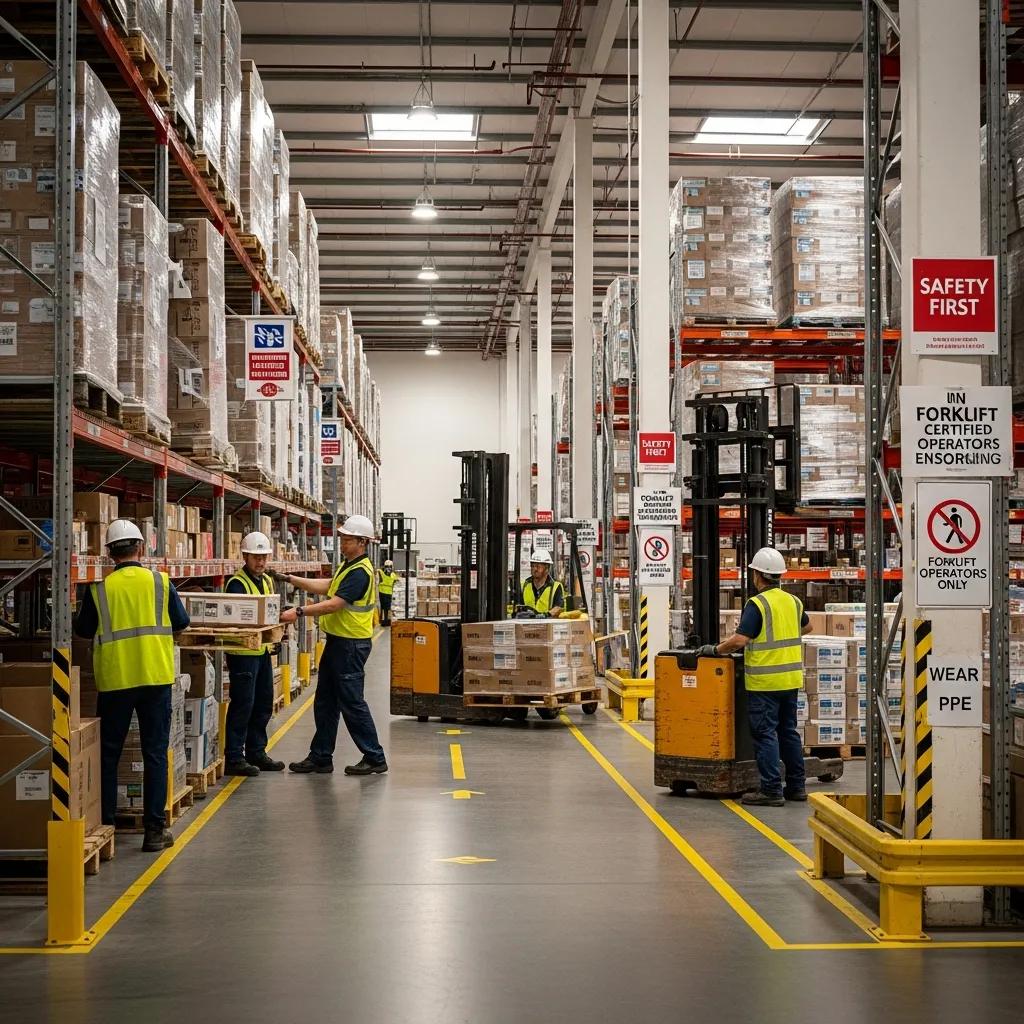
Forklift work moves fast: tight aisles, busy docks, pedestrians, and production pressure. Looking at a facility before and after operator certification shows exactly why training matters—not just for “compliance,” but for making your shift safer, smoother, and less stressful.
This guide breaks down what an uncertified workplace often looks like, what training is supposed to cover, and the practical changes that show up on the floor once operators are trained and evaluated.
What the Job Feels Like Before Forklift Certification
In places where operators haven’t been formally trained and evaluated, the same problems pop up again and again:
- Rules change depending on who’s watching
- Pedestrians drift into lift lanes
- Dock work turns into “just get it done”
- Loads are handled differently by every operator
- Pre-shift checks are skipped or rushed
That inconsistency is where most close calls start. And when something goes wrong, it’s usually the operator who gets blamed—even when the real problem is missing training, unclear procedures, or a poorly organized floor.
What Goes Wrong Without Certification (And Why It Costs You)
When operators aren’t trained and evaluated, incident risk goes up. Not because people don’t care—but because they haven’t been coached on the same expectations and safe habits.
The most common “near-miss triggers” in uncertified operations
These are the situations that lead to most hits, drops, and close calls:
- Blind corners and intersections with no stop-and-honk habit
- Pedestrians crossing through forklift travel paths
- Traveling with loads too high, blocking forward vision
- Speed in tight areas (racking, aisles, dock approach)
- Unstable or damaged pallets (broken stringers, leaning stacks)
- Turning with an elevated load (tip risk + product damage)
- Dock hazards (dock plates, drop-offs, trailer movement)
- Racking contact (light taps that turn into expensive damage)
- “Quick fixes” like pushing pallets or dragging loads
- Unsafe parking (forks left up, truck left powered on, key left in)
Beyond injuries, mistakes get expensive fast—damaged product, bent racking, busted dock equipment, and downtime when a truck is out of service.
What Forklift Certification Is Really For
Forklift certification isn’t just a card. It’s proof that you were trained and evaluated to operate the specific kind of powered industrial truck you use, in the conditions you work in.
OSHA requires forklift operators to be trained and evaluated
Training must include:
- Formal instruction (classroom/online style learning)
- Practical hands-on training
- A performance evaluation showing you can operate safely in your workplace
The goal is simple: you can’t rely on “watch and learn” when the hazards are heavy loads, tight spaces, and people walking nearby.
What Changes After Certification (What You’ll Notice on the Floor)
When training is done right and the workplace supports it, the shift starts to feel different in the best ways:
- Fewer unpredictable moves from other operators
- Clear right-of-way expectations
- Less last-second braking and swerving
- Cleaner aisles and better staging
- More consistency across shifts
Certified operators tend to run smoother because they’re working from the same playbook.
The Biggest “After Training” Improvements You’ll See
1) Intersections get safer
Operators adopt habits like:
- Slow down early
- Stop at blind corners
- Sound the horn
- Creep forward until clear
That one change alone prevents a huge share of forklift vs. pedestrian and forklift vs. forklift incidents.
2) Loads get handled the same way (every time)
Training reinforces core load rules:
- Keep the load low while traveling
- Tilt back appropriately
- Don’t lift/turn at speed
- Confirm pallet condition before committing
This reduces dropped loads, product damage, and tip hazards.
3) Dock work becomes controlled instead of chaotic
Certified operations typically tighten up:
- Trailer entry/exit procedures
- Clear staging zones
- Dock approach speeds
- Rules for working around edge hazards and dock plates
The dock is one of the highest-risk areas in most facilities—training brings discipline to it.
Best Practices Forklift Operators Can Use Every Shift
The “3-minute habits” that prevent most forklift incidents
- Intersections: stop, horn, creep—every time
- Travel position: load low, controlled speed, clear view
- Parking: forks down, neutral, brake set, power off, key controlled
Simple, repeatable habits beat “being careful” every time.
Daily Forklift Inspection Checklist (Operator-Focused)
Pre-shift checks catch small issues before they become dangerous. A solid routine includes:
Visual checks
- Forks (cracks, bends, locking pins)
- Mast and chains (damage, slack, obvious defects)
- Tires (chunking, wear, low pressure if pneumatic)
- Leaks (hydraulic fluid, oil, battery acid, fuel)
- Overhead guard and load backrest condition
Operational checks
- Horn and backup alarm (if equipped)
- Lights and strobe (if equipped)
- Brakes, parking brake
- Steering responsiveness
- Lift/lower/tilt controls
- Travel direction control and speed response
If something isn’t right, report it and tag it out per your site procedure. “It’ll probably be fine” is how breakdowns and injuries happen.
Keeping Skills Sharp After Certification
Certification is the baseline. Strong sites keep operators sharp with:
- Quick refreshers (toolbox talks)
- Coaching after near-misses
- Re-evaluations when conditions change (new truck type, new layout, new tasks)
- Clear enforcement of traffic rules and pedestrian controls
The safest operators aren’t the ones who “never mess up”—they’re the ones who follow the same safe process every single time.
Step-by-Step: Forklift Certification Process (What to Expect)
A typical operator certification path includes:
- Training modules covering safe operation and hazard awareness
- Site-specific instruction (your facility layout, traffic patterns, rules)
- Hands-on evaluation where you demonstrate safe operation
That evaluation is where it becomes real: you show you can operate safely, not just answer questions.
Frequently Asked Questions (Forklift Operator Edition)
Can I drive a forklift if I’ve driven one at another job?
Not automatically. Experience helps, but employers still need to ensure you’re trained and evaluated for the equipment and conditions at your current site.
What’s the most common reason operators fail an evaluation?
Usually it’s fundamentals: speeding, turning with elevated loads, poor intersection control, or unsafe parking habits.
Do I need new training if I switch forklift types?
Often, yes. Switching from sit-down to stand-up, adding attachments, or moving into different operating conditions can require additional training and evaluation.
What should I do if the forklift fails inspection?
Don’t run it. Report it and follow your site’s tag-out procedure. A small defect can become a serious incident when the truck is under load.
Conclusion
Forklift certification changes more than paperwork—it changes how the job gets done. Trained, evaluated operators have clearer expectations, fewer close calls, less damage, and more control in the busiest parts of the facility.
If your goal is a safer shift and a smoother operation, certification is one of the most practical steps you can take.