OSHA Forklift Requirements: 29 CFR 1910.178 Explained
Content reviewed September 30, 2026.
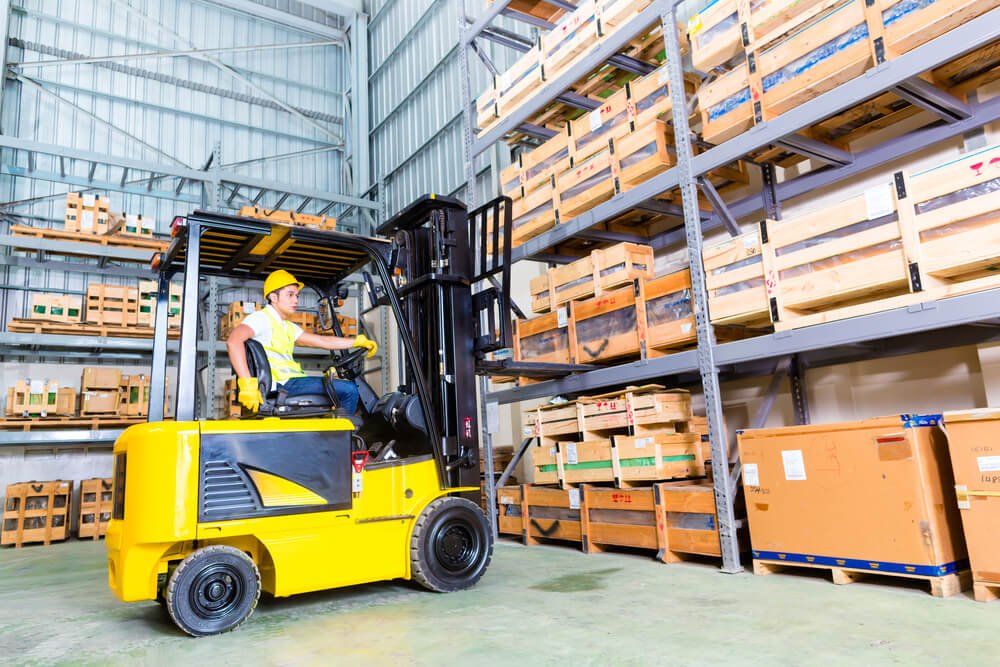
OSHA’s powered industrial truck standard places responsibility for operator competence on the employer. Training must cover the truck and workplace hazards, combine formal instruction with practical training and evaluation, and be documented.
Formal instruction is one part of the process
The employer must ensure that operators receive formal instruction, practical training, and an evaluation of their performance in the workplace. Trainers and evaluators must have the knowledge, training and experience to teach operators and evaluate their competence. A course certificate alone does not establish those qualifications. Relevant previous training may count under 29 CFR 1910.178(l)(5); the employer remains responsible for operator competence and the certification record.
Read OSHA’s operator training requirements.
Key OSHA forklift provisions
| Provision | Requirement |
|---|---|
| (l)(1) | Ensure operator competence |
| (l)(2) | Training, practical exercises and evaluation; qualified trainers |
| (l)(3) | Truck-related and workplace-related topics |
| (l)(4) | Refresher triggers and evaluation at least every three years |
| (l)(5) | Recognize relevant previous training without unnecessary duplication |
| (l)(6) | Employer certification records |
| (q)(7) | Pre-service, daily and shift inspections |
United States requirements
This page describes federal OSHA rules for general industry. Construction operator training is addressed through 29 CFR 1926.602(d). State-plan requirements and rules for other industries may differ. Consult the applicable standard for your workplace.
Current maximum penalties include $16,550 for a serious or other-than-serious violation, $165,514 for a willful or repeated violation, and $16,550 per day for failure to abate. Check OSHA’s penalty table for current amounts.
Common questions
What does OSHA require for forklift operators?
Three things, set out in 29 CFR 1910.178(l). First, the employer must ensure every operator is competent before letting them operate a truck, demonstrated by successful completion of training and evaluation — 1910.178(l)(1). Second, that training must combine formal instruction, practical training, and an evaluation of the operator's performance in the actual workplace — 1910.178(l)(2)(ii). Third, the employer must certify the result in a record naming the operator, the date of training, the date of evaluation, and who performed them — 1910.178(l)(6). The standard also lists the truck-related and workplace-related topics the training has to cover, in 1910.178(l)(3).
Which OSHA standard covers forklifts?
29 CFR 1910.178, titled Powered industrial trucks, is the general industry standard covering forklifts, and paragraph (l) is the part dealing with operator training. OSHA calls forklifts powered industrial trucks, which is why searching the regulation by the word forklift often misses it. On construction sites the equivalent is 29 CFR 1926.602(d), which adopts the same training requirements by reference. Maritime work has its own versions: 1915.120 for shipyards, 1917.43 for marine terminals and 1918.65 for longshoring.
Does forklift certification expire? How often is refresher training required?
OSHA does not set an expiry date on a certification. What 29 CFR 1910.178(l)(4)(iii) requires is an evaluation of each operator's performance at least once every three years — an evaluation, not necessarily a full retraining course. Refresher training is required separately, and it is triggered by events rather than by the calendar. Under 1910.178(l)(4)(ii) it is required when the operator has been observed operating unsafely, has been involved in an accident or a near-miss, is found lacking in an evaluation, is assigned a different type of truck, or when conditions in the workplace change in a way that could affect safe operation. In practice most employers run refresher training alongside the three-year evaluation, which is why the two are often described as one rule.
Who is allowed to train and evaluate forklift operators?
Anyone the employer designates who meets the test in 29 CFR 1910.178(l)(2)(iii): the person must have the knowledge, training and experience to train powered industrial truck operators and evaluate their competence. There is no OSHA license, registry, accreditation or approved-trainer list, and OSHA does not certify, approve or endorse trainers, training providers or course materials. The employer makes the designation and carries responsibility for it, which is why documented trainer training matters if the designation is ever questioned.
How old do you have to be to operate a forklift?
Eighteen, in most non-agricultural workplaces — and the rule comes from labor law rather than from OSHA. 29 CFR 570.58, Hazardous Occupations Order No. 7 under the Fair Labor Standards Act, prohibits workers under 18 from operating power-driven hoisting apparatus, which includes forklifts. 29 CFR 1910.178 itself sets no minimum age. Agricultural employment and some state rules differ, so check the rules that apply to your operation.
Do you need a driver's license to operate a forklift?
No. 29 CFR 1910.178 does not require a driver's license, and a forklift certification is not a license issued by any government body — it is an employer's record that the operator was trained and evaluated. Some employers require a driver's license as their own hiring condition, and one is needed if a truck will be driven on a public road, but neither of those comes from the forklift standard.
Does OSHA require steel-toe boots or other PPE for forklift operators?
29 CFR 1910.178 contains no forklift-specific PPE list, so there is no rule that says forklift operators must wear steel-toe boots. What applies instead is the general PPE standard: 1910.132 requires the employer to assess the workplace for hazards and provide the PPE those hazards call for, and 1910.136 governs foot protection where there is a danger of falling or rolling objects. In most warehouses that assessment does end in protective footwear — but it is the hazard assessment that requires it, not the forklift standard.
What are the penalties for operating a forklift without proper training?
OSHA's maximum civil penalties are $16,550 per serious or other-than-serious violation and $165,514 per willful or repeated violation, with failure-to-abate penalties accruing at up to $16,550 per day. The employer is the party cited: 29 CFR 1910.178(l)(1) places the duty to ensure operators are trained and competent on the employer, not on the operator. Penalty amounts are reviewed for inflation, so check OSHA's current penalties page before relying on a figure.
Choose your next step
- Train the Trainer — $149
- Employee Training Kit — $399
- Both together — $499, save $49
- Individual operator training
- Read the OSHA requirements
Questions? Call (888) 278-8896.
Related resources: Forklift FAQ · Renewal and evaluation.